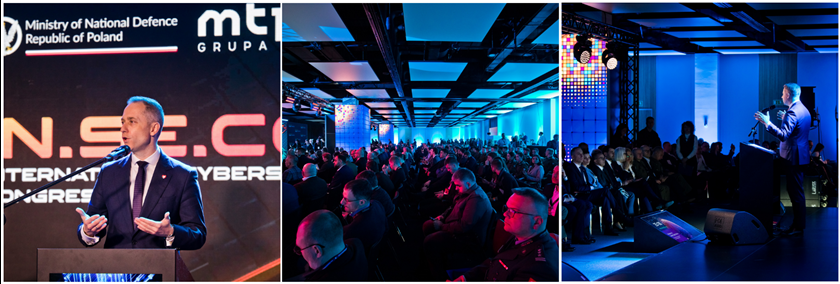
IN.SE.CON 2026 as a platform for strategic dialogue on cybersecurity.
IN.SE.CON 2026 is not just an expert conference, but a forum that exerts a real influence on strategic, investment, and personnel decisions in the field of cybersecurity. The Director of the Cybersecurity Department at the Ministry of National Defense discusses the behind-the-scenes preparations, key program objectives, and the Congress’s significance for the national security system.
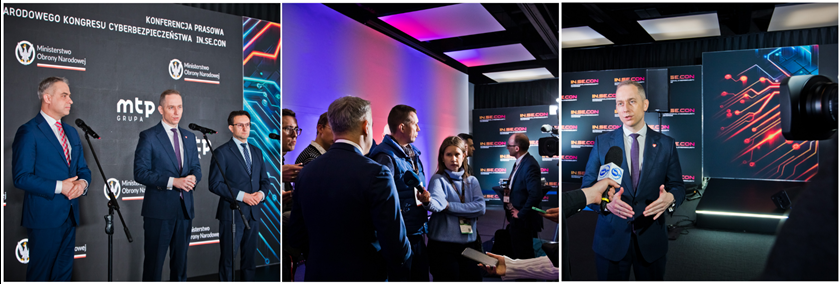
IN.SE.CON 2026 will take place this April. What stage are the preparations currently at?
Paweł Dziuba, Director of the Cybersecurity Department at the Ministry of National Defense: We’re in the final stretch. The last exhibitors are signing up, the conference program is practically finalized, and we’re working on the usual organizational details. This is always the most intense phase, but it’s also when the event’s final shape starts to take form.
What were the main objectives in creating this year’s edition?
As the Cybersecurity Department of the Ministry of National Defense, we view IN.SE.CON through the lens of the current geopolitical situation and the challenges facing Poland and the Polish Armed Forces, including the Cyber Defense Forces. We focus on the practical aspects of solutions that enhance security in the context of the digital transformation of both the military and civilian sectors. Cybersecurity is one of the areas that is developing very dynamically. This year’s edition not only offers an overview of trends but also provides an opportunity to learn about the latest tools and approaches shaping cybersecurity in the civil-military sphere.
The speakers play a key role. Who will take the stage at IN.SE.CON 2026?
We have focused on expert practitioners with a wide range of experience. The lineup of speakers includes top-level representatives from the government, the Cyber Defense Component Command, and international experts.
The selection of speakers stems primarily from the need to provide a holistic view of cybersecurity—in strategic, operational, and technological contexts alike. We are inviting public administration leaders responsible for shaping security policies, representatives of the armed forces with experience in real-world cyber operations, and both national and international experts—who bring a global perspective.
This year, we are also pleased to invite our Polish astronaut, Mr. Sławosz Uznański-Wiśniewski, who has tested modern technologies and had the opportunity to personally practice their application in space.
Competencies related to national security management, experience in responding to cyber incidents, and participation in the development of innovative technological solutions are of key importance. The Congress brings together individuals who have a real impact on security systems—both at the national level and within the framework of international cooperation, including within NATO and the European Union.
There are also side events organized as part of the conference. Could you tell us about them?
Yes, one of the highlights of this year’s edition will be the Competent Authorities Forum. This is a special, closed-door segment of the event dedicated to representatives of public institutions, regulators, and entities responsible for the security of critical infrastructure.
The forum aims to create a space for the exchange of experiences among competent authorities, to discuss current regulatory challenges, and to coordinate cybersecurity efforts—particularly in the context of implementing new regulations and responding to cross-sectoral incidents.
Debates on military-industrial cooperation and dual-use technologies show that security is now a shared responsibility among many sectors. How does the Congress support the development of practical mechanisms for cooperation between these sectors?
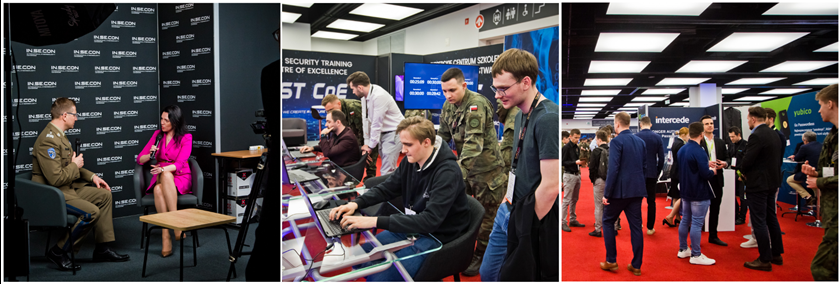
IN.SE. CON is an exhibition space featuring a range of exhibitors showcasing digital and cutting-edge technologies, as well as a platform connecting various communities—from public administration and the military, through business and the technology sector, to academia. In practice, this means not only the participation of representatives from these sectors in panel discussions, but also the creation of a space for direct meetings, the exchange of experiences, and the presentation of specific solutions.
The congress offers both strategic debates and an exhibition area where companies and institutions showcase technologies supporting the protection of critical infrastructure and state systems. This makes it possible to translate discussions into concrete partnerships and projects. The event attracts representatives from a wide range of sectors—from the armed forces and critical infrastructure operators to global technology companies—which fosters the creation of tangible mechanisms for cooperation.
Can participation in IN.SE.CON realistically influence investment decisions, the direction of skills development, or changes in the approach to cyber risk management within participants’ institutions? If so, how?
Definitely yes. IN.SE.CON serves not only as a conference but also as a forum for exchanging experiences. Participants have access to up-to-date knowledge about threats, technological trends (e.g., the role of AI in cybersecurity), and proven incident response practices.
As a result, institutions can better identify investment priorities in the area of cybersecurity, adapt risk management strategies to the evolving threat landscape, and develop their teams’ competencies based on real-world case studies and the experiences of other organizations. Importantly, the Congress serves as a platform for formulating recommendations and exchanging experiences among leaders from various countries, which directly influences the development paths of participating organizations. As a result, the event contributes to enhancing the cyber resilience of both public and private institutions.
In summary, I believe that the IN.SE.CON International Cybersecurity Congress in Poznań is not only an expert event but also a practical tool for shaping cooperation, competencies, and strategic decisions in the field of cybersecurity—at the intersection of government, the military, business, and academia.
How has IN.SE.CON changed over the years?
It has definitely grown—both in terms of content and scale, as well as the diversity of exhibitors focused not only on cybersecurity but also on breakthrough technologies. Today, it is an event that brings together experts from many fields and sectors. IN.SE.CON is slowly gaining recognition on the international stage.
Finally—why is it worth attending the Congress?
It’s a unique combination of technical knowledge, practical experience, and strategic perspective. Participants have access not only to experts but also to substantive discussions about the future of cybersecurity, as well as to exhibitors representing key companies in the IT, cybersecurity, and breakthrough technology sectors—companies offering solutions that support security in both the civilian and military spheres.
Thank you for the interview.